Projects
Enterprise
From pilot project to investable social model
ILC has been developed based on concrete experiences with people, communities, nature, construction and practical work.
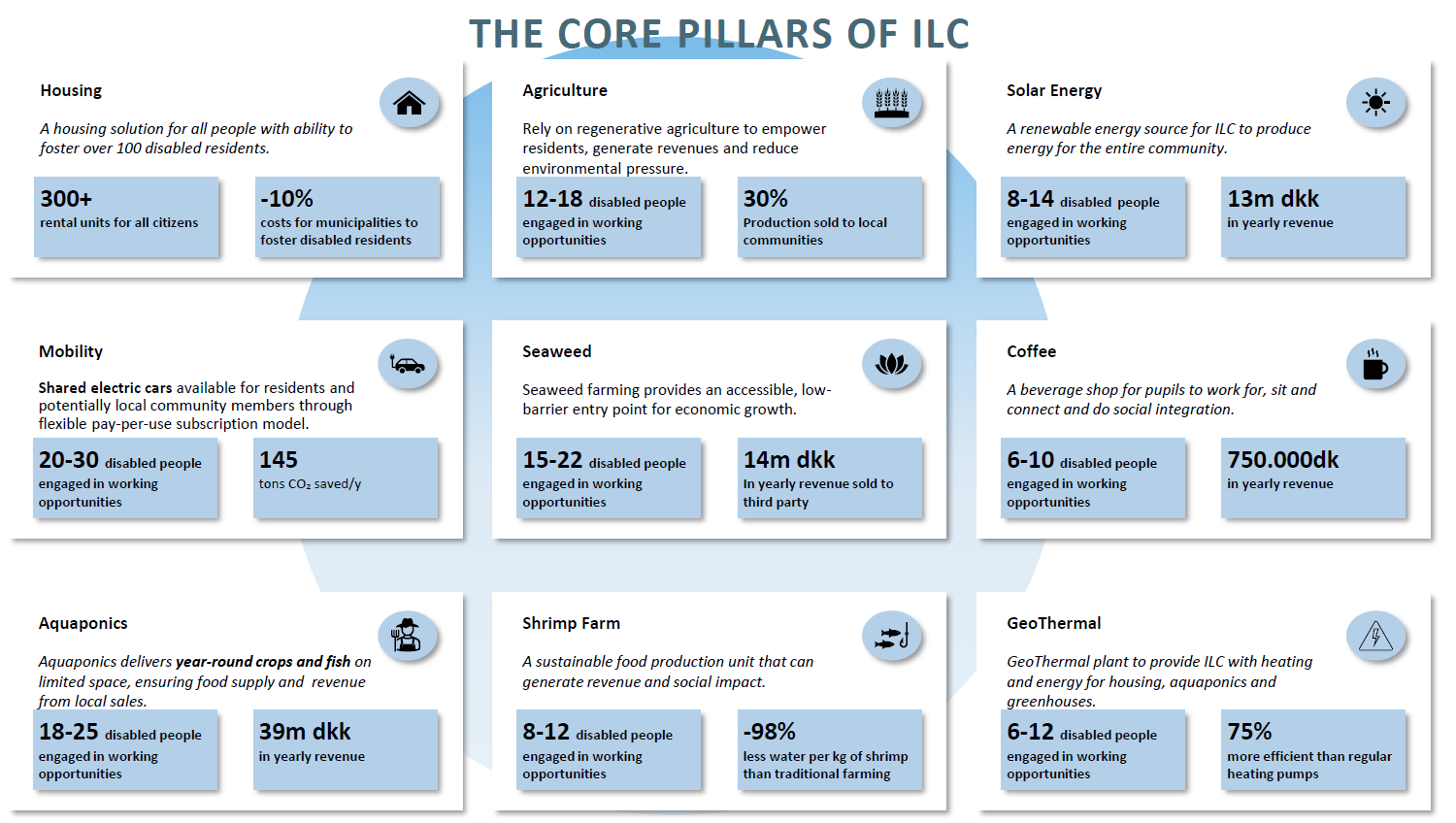
An important starting point was the work with aquaponics at Østagergård. Here, sustainable food production, social employment and meaningful everyday communities were thought together in practice. The project showed that there is great potential in creating places where people not only live, but also participate, contribute and become an active part of a community.
The experiences from Østagergård became an important basis for the further development of ILC. They showed that social value is not only created through support and offers, but also through responsibility, relationships, practical tasks and the feeling of being needed by others.
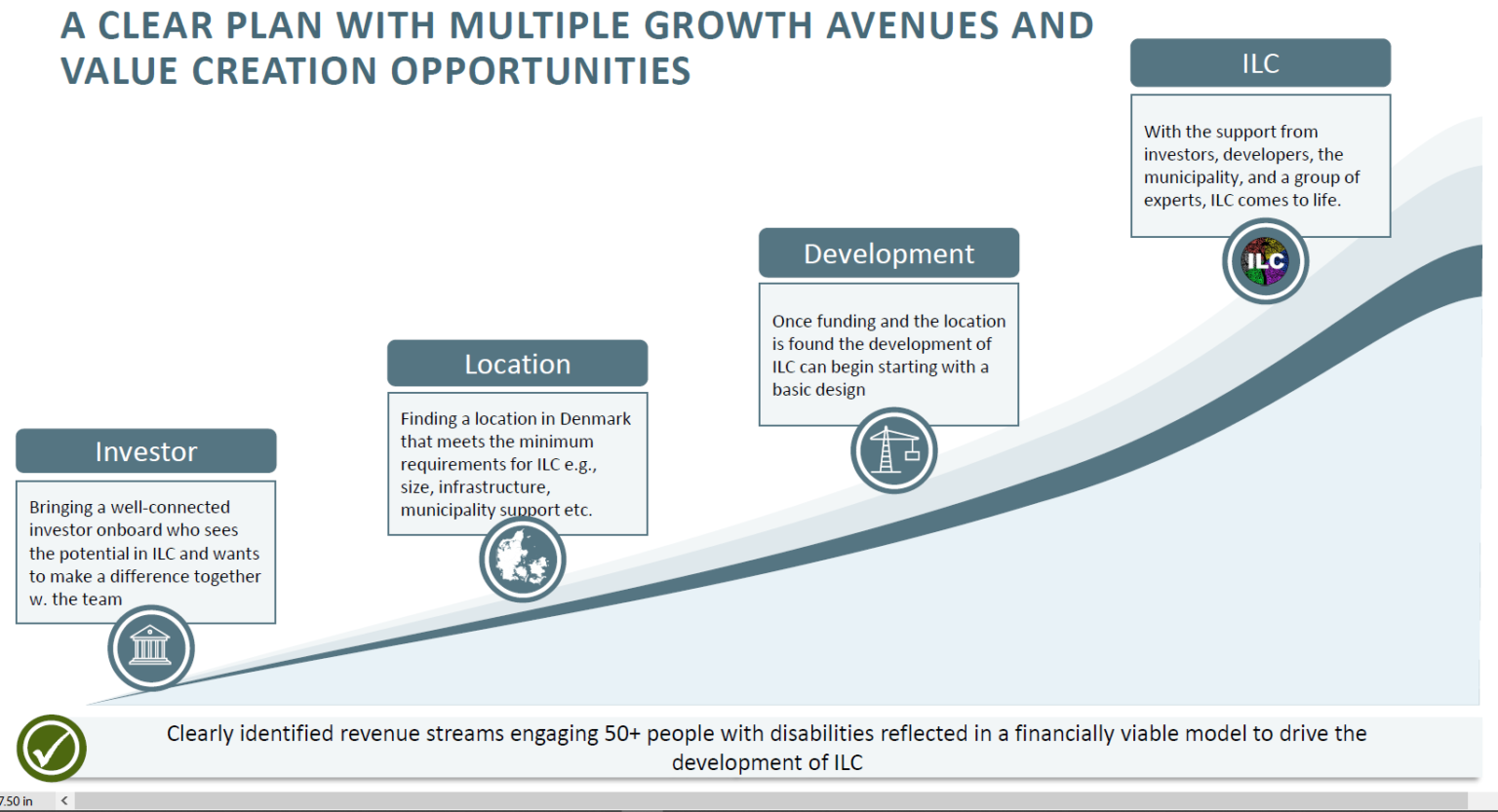
The past 12+ months of work with ILC have therefore been about lifting the project from idea and pilot level to a comprehensive model that can be built, financed and operated on a larger scale.
In this phase, the focus has been on investigating how ILC can be developed as a new type of housing and living community, where social sustainability, nature, construction, operation and economy are interconnected. It has not only been about describing a vision, but also about making the model concrete enough so that it can be professionally assessed by municipalities, foundations, investors and other long-term partners.
Together with external advisors, work has been done to structure the project, qualify the prerequisites and develop an economic model that shows how ILC can function in practice. The work has included, among other things, investment needs, operating economics, organization, scalability and the possibilities for a long-term return.
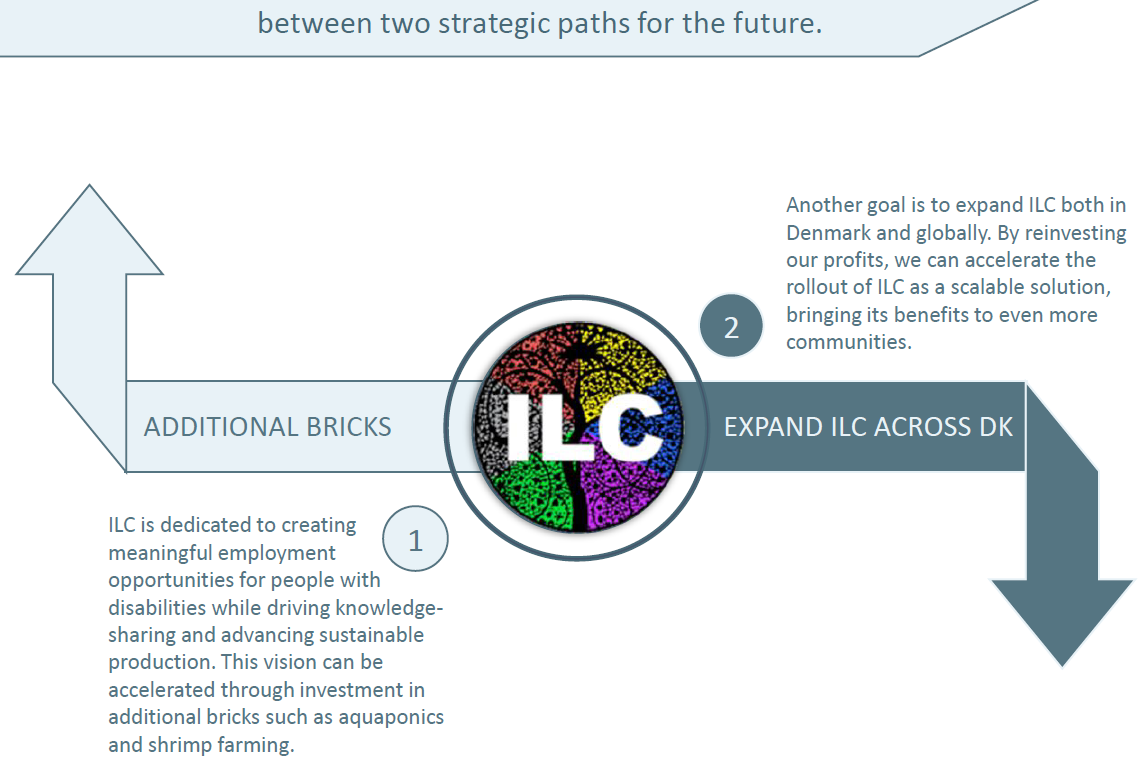
The result is that ILC can today be described as a comprehensive development project with an investment framework of around 1 billion kroner.
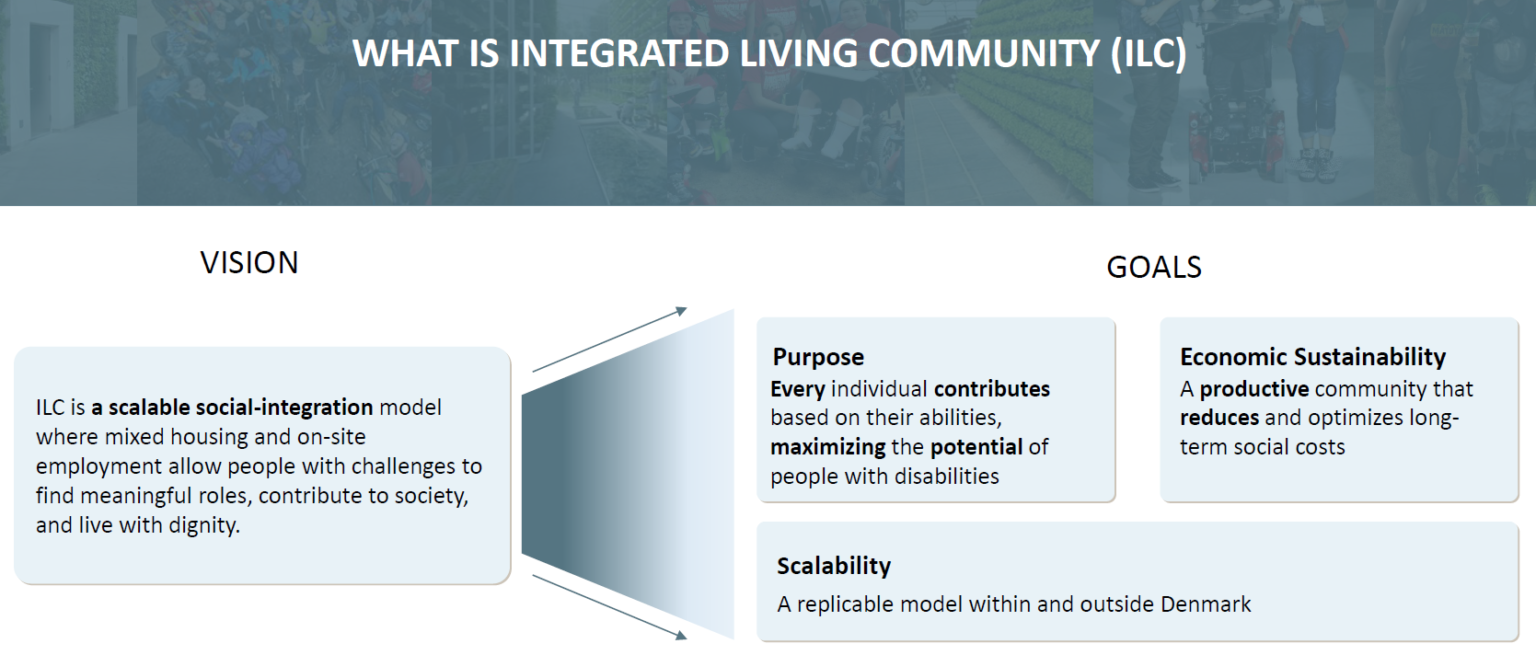
This is an important step because ILC should not only be a social project or a housing project. ILC must be an economically sustainable social model, where long-term investors — including pension funds — can see a realistic return, while the project creates measurable social value.
The model is based on a double bottom line:
• a long-term economic return
• a clear social and societal impact
ILC must show that it is possible to build and run communities where people, nature and the economy support each other. Where housing is not just about square meters, but about quality of life, belonging, participation and everyday communities.
The ambition is to create places where young people, the elderly, people with special needs, people with social challenges and ordinary families can live side by side. Not as separate groups, but as part of the same community.
Therefore, ILC is also about rethinking the way we build and organize local communities. It is about creating frameworks where people can contribute in different ways, and where social efforts are not sidelined by everyday life, but are a natural part of it.
The last 12+ months of work have therefore been crucial. This has moved ILC from being a strong idea with concrete pilot experiences to a model that can be presented to municipalities, foundations, pension funds and investors as a serious proposal for the inclusive living and living communities of the future.
ILC is thus not just a vision of better housing. It is a proposal for how we can create new communities where social responsibility, sustainability and economic realism go hand in hand.
Aquaponics
Building new Social Economic Enterprise in 2022 - We are collaborating with DTU Aqua, Egmont Højskolen, Østagergård and Akvaponisk Have - in part funded through CoroLab in Roskilde with EU funding.
The main principle of aquaponics is very simple and mirrors nature. Fish are grown in tanks and nutrient-rich water from these tanks is pumped into hydroponic beds where vegetables, herbs, flowers and other crops absorb the nutrients for growth and purify the culture water, which is returned to the fish rearing tanks. Although the fish are living in a tank, in essence they are being raised in a river where their waste products are swept away and replaced with clean water. The plants are grown in water containing high levels of oxygen and nutrients – everything they need – without the problems associated with soils, such as weeds, soil diseases, pests and other toxicant issues and an often-experienced lack of oxygen or moisture. Plants remove only the water they need for growth.
Aquaponics is a clean aquaculture production technology system where fish waste is used as nutrients for growing vegetables. This technology can also create incentives for environmental compliance by increasing fish production and providing food security, while radically reducing water consumption, reducing nutrient discharge and providing independence from external climatic phenomena.
- Water reuse in the aquaponic system is more than 95%.
- Vegetables grow 30-50% faster than in soil.
- Greenhouse provides 12 mths continued production.
- Aquaponic grown vegetables have higher quality and longer shelf-life than vegetables grown in soil.


Aquaponic plant production beds can be layered vertically, allowing for minimal m2 use and maximum m3 volume growth indoors.
This project will establish three operational aquaponic systems. One for R&D at DTU SkyLab in Lyngby, one new system at ØAG and one new system at Egmont Højskolens new farm.
Our overall long term research aim is to establish:
1) Optimal setup for the danish climate and environment – mainly temperatures / lighting / nutrition.
2) Produce optimisation for the purpose of return on investment.
3) Social integration meaning allowing for optimal setup for operation by people with different abilities.
4) A for profit Social Economic Commercial Business model to form part of the ILC-Model.
Sustainable Housing
YOUR HOME
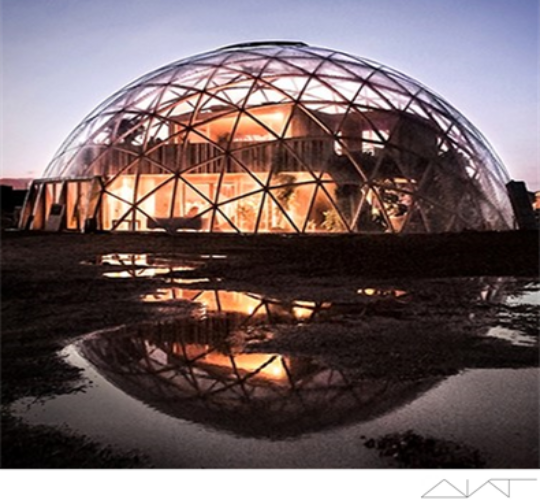
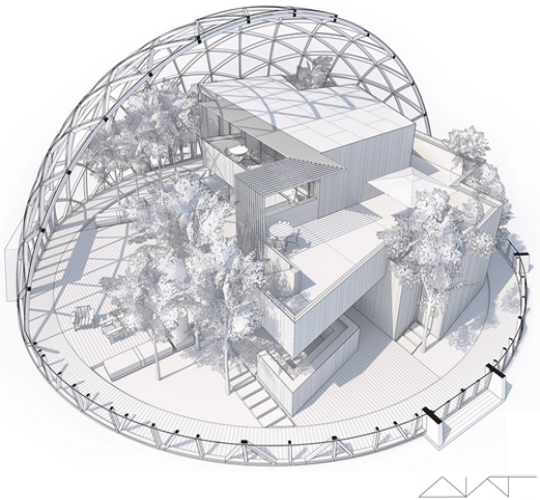
New sustainable designs - some © Copyright AKT - Atelier Kristoffer Tejlgaard www.atelierkristoffertejlgaard.com

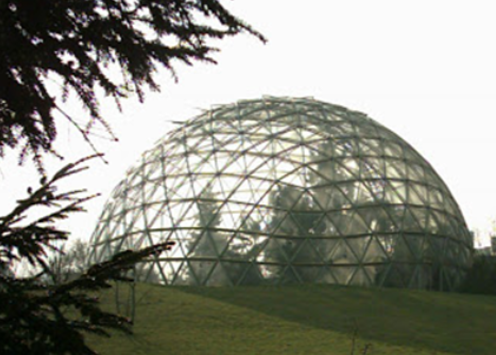

Aquaponic plant production beds can be layered vertically, allowing for minimal m2 use and maximum m3 volume growth indoors.
This project will establish three operational aquaponic systems. One for R&D at DTU SkyLab in Lyngby, one new system at ØAG and one new system at Egmont Højskolens new farm.
Our overall long term research aim is to establish:
1) Optimal setup for the danish climate and environment – mainly temperatures / lighting / nutrition.
2) Produce optimisation for the purpose of return on investment.
3) Social integration meaning allowing for optimal setup for operation by people with different abilities.
4) A for profit Social Economic Commercial Business model to form part of the ILC-Model.
Social Integration

NBMC & Integrated Living Culture
NAT U R E BODY M I N D COMMUNITY
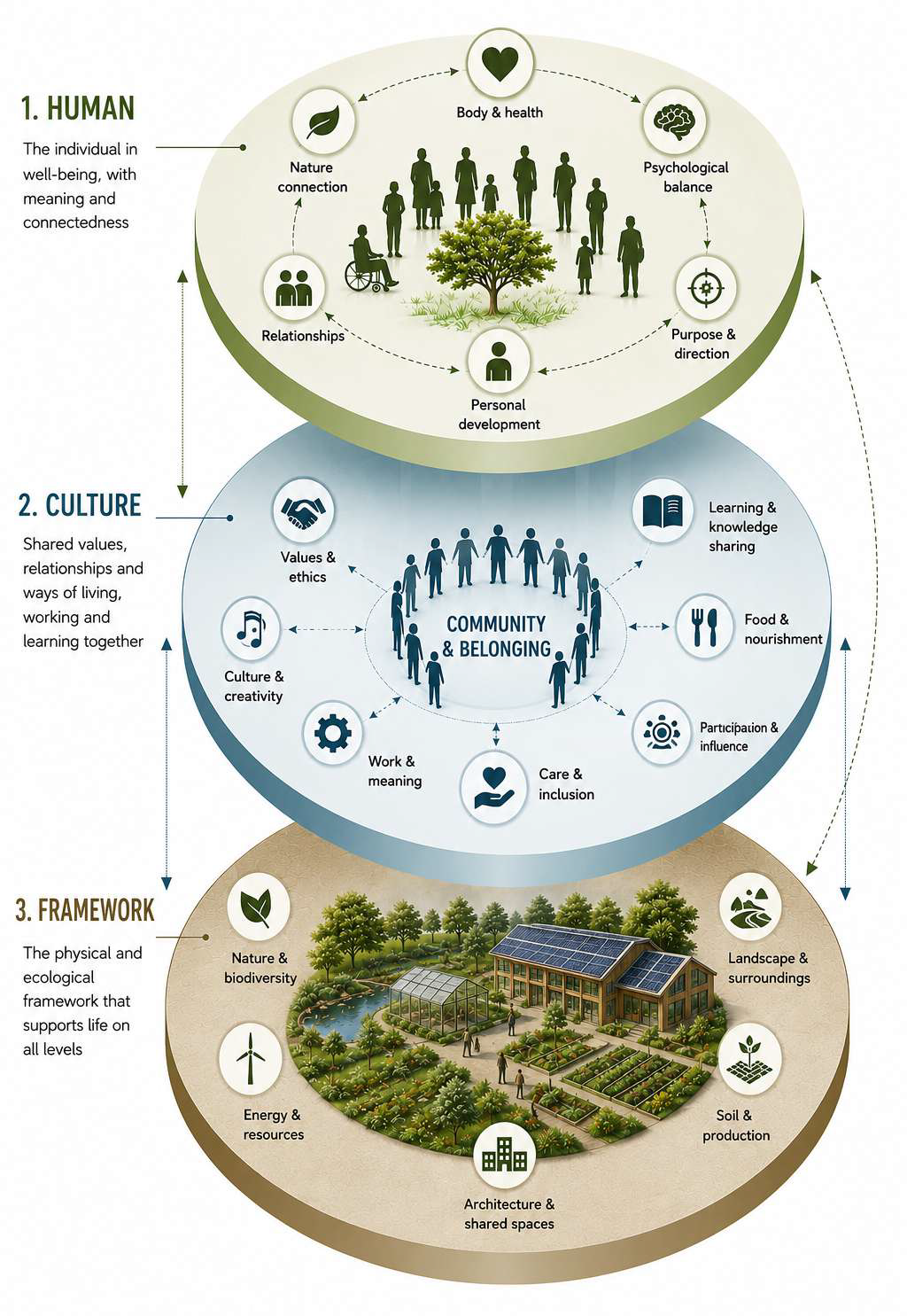
ViNatur – strategic partner, culture developer and method carrier
“Live with intention” should not only be a physical housing and production project. It should be developed as a living culture and a regenerative view of humanity, where nature, people, production, community and way of life are integrated into one whole. Here, the NBMC method (Nature–Body–Mind–Community) becomes the central philosophical, cultural and practice-based foundation for the entire project.
ViNatur is the strategic partner and sender of the human, social and cultural dimension in the project and ensures that the vision is not just architecture and sustainable technology, but a truly integrated community of life.
NBMC is fundamentally about re-establishing the connection between man, the body, nature, community and the purpose of life. The method is based on the understanding that human well-being, health, social capacity and sustainability cannot be separated from the environments and communities in which we live. Therefore, NBMC should not be a parallel offer in the project – but the lifestyle and culture itself that permeates the way people live, work, meet, produce and develop.
NBMC will govern the structure on three levels. The personal, the cultural, between people and in their surroundings.
NBMC integrated into personal development
All professional functions that work with people in the project — including therapists, coaches, educators, facilitators, social workers, health professionals and community leaders — must be trained in the NBMC method through ViNatur. In this way, NBMC becomes a shared practice and professional culture.
NBMC training must ensure shared competencies within, among others:
- Nature-based therapy and health promotion. Embodiment, body awareness. nervous system regulation and stress understanding
- Group processes and community formation
- Regenerative culture and human well-being
- Nature-based leadership and facilitation
- Existential and meaning-based development
NBMC as an integrated culture
The project is to be developed as an “Integrated Living Culture”, where NBMC becomes a practical way of life and a common cultural frame of reference.
Social integration is the key word and this means, among other things:
- That nature is not considered as a recreational background, but as an active participant in human well-being and development.
- That communities are designed based on human needs for belonging, meaning and participation.
- That production, food, energy, learning and social life are thought together in regenerative cycles.
- That people experience themselves as valuable participants in a living community.
- That everyday life is organized around presence, participation, sensuality, rhythms and purpose
NBMC must therefore be felt in both the atmosphere, relationships, decisions and the physical surroundings.
NBMC integrated into working life
NBMC should not only be present in therapeutic or social activities. The method must be integrated directly into production, working life and daily rhythm. Production should not only create economic value, but also human dignity, participation, social integration, learning, identity and purpose, connection to nature. Work with food, cultivation, nature restoration, energy, kitchens, workshops and common functions should be designed as meaningful participation spaces, where people experience themselves as an important part of a larger living cycle. This means, among other things:
- Production closely linked to the rhythms of nature.
- Sensual and aesthetic working and living environments.
- Regenerative learning environments.
- Nature-based recovery spaces integrated into everyday life
NBMC integrated into architecture and surroundings
NBMC should be an active design parameter in physical planning and architecture. Here, knowledge about sustainable design, operation and production should be brought into play. The framework should support:
- Calmness and regulation of the nervous system.
- Natural encounters between people.
- Contact with light, air, seasons and landscape.
- Sensuality and aesthetics.
- Security and belonging.
- Movement and participation.
- Access to nature and regenerative environments.
This means that the surroundings should not only be sustainable, but also therapeutic, human and life-supporting. NBMC should therefore be considered in:
- Landscape design
- Common spaces
- Production environments
- Path systems
- lLs and materials
- Social transition spaces
- Quiet zones and nature zones
- Learning and reflection spaces
- Living forms and community structures
ViNatur’s role in the project
MBMC shall be the unifying method and culture partner that ensures coherence between the project’s framework, communities, therapy, education and regenerative lifestyle.
ViNatur shall facilitate the collaboration between architects, foundations, strategic partners and the social and therapeutic functions, so that the project is developed as one integrated culture rather than separate functions.
NBMC will be the common method and culture that connects people, nature, production and community in a unified vision of a meaningful and regenerative life.
ViNatur contributes with expertise in nature-based health promotion, community and regenerative organizational development. With experience from competence development of over 6,000 professionals, we create frameworks for well-being, meaningful communities and healthy environments with room for diversity.